
Education
Services along the Nile-ET
/ Where We Work
Empowering Minds Along the Nile

Explore Our Educational Programs

Services along the Nile International Ethiopia has been delivering inclusive education services for more than four decades. Our education work began in 1982 at the Misrach Vocational Training and Rehabilitation Center, where we pioneered vocational and literacy programs for persons with disabilities.

Since then, the Center has provided vocational training in sewing, woodworking, optics, and puzzle making, as well as functional Braille literacy for blind learners. Over the years, more than 700 blind individuals have been trained in functional Braille literacy, and thousands of persons with disabilities have benefited from vocational skills development. In addition, many thousands of blind schoolchildren have been supported through extended social programs, including the provision of educational materials, dormitory services, and assistive devices.

Beyond disability-focused education, we also support early childhood education services in partnership with Nile Development Services in Nono Woreda, West Shewa Zone, Oromia Region, ensuring young children have access to quality, holistic early learning opportunities.

Our Education Programs
Our Education Approach

We believe education—especially vocational skills development—is a powerful pathway to independence and dignity for persons with disabilities. Through skills training, rehabilitation, and empowerment, individuals are supported to build confidence, earn a livelihood, and actively participate in society. Similarly, investing in early childhood education lays the foundation for lifelong learning. By supporting children’s cognitive, social, emotional, and physical development at an early age, we help them grow into resilient, capable learners prepared for future success.

Vocational Training and Rehabilitation

The Vocational Training and Rehabilitation Program supports individuals with physical, hearing, and visual disabilities through long-term and short-term training.

Long-term training lasts two years—one year of workshop-based instruction and one year of practical apprenticeship. Training areas include woodworking, sewing, optics, and puzzle making, while short-term courses cover computer skills (including JAWS for blind users) and food preparation.

Apprenticeships provide on-the-job experience, with all training products created for practical use or sale, ensuring graduates gain market-relevant skills.

Misrach Center offers a supportive and inclusive environment, combining technical training with personal guidance and counseling. Many participants transform their lives, gaining confidence, independence, and the ability to actively contribute to society.

Vocational Training Programs
We provide
Woodwork Training
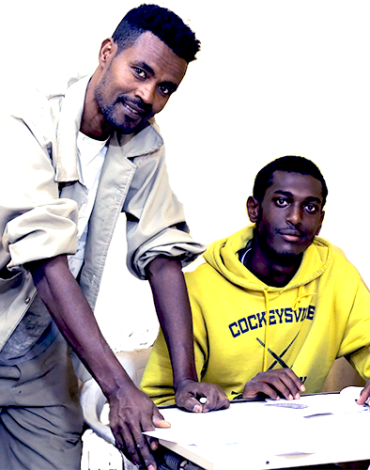
The Woodwork Training Program is designed for deaf and physically able trainees with the strength and coordination needed for carpentry and machine operation. Since moving to a spacious, fully equipped workshop at Misrach Center II in 1995, the program offers a machine hall, assembly and finishing rooms, varnishing facilities, and maintenance units. Trainees learn about wood treatment, measurement, technical drawing, machine operation, and quality control. Hands-on practice includes making furniture, decorative items, and components for brush production. This approach ensures graduates acquire market-relevant skills and high-quality craftsmanship.
Sewing and Tailoring Training
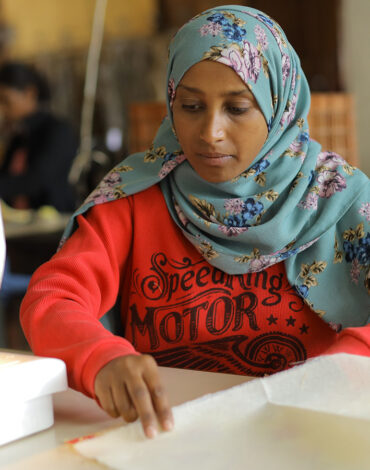
Serving deaf and physically disabled trainees, this two-year program teaches measuring, pattern cutting, manual and machine sewing, and textile handling. Trainees gain skills in machine care, production efficiency, teamwork, and quality standards, as well as ironing and product presentation. Graduates can produce dresses, toys, household items, bags, workwear, and modify designs to client needs, preparing them for self-employment or cooperative production.
Puzzle and Craft Making
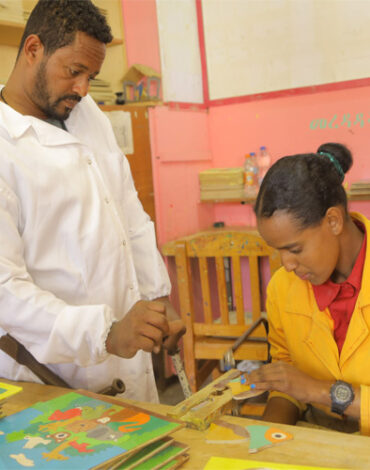
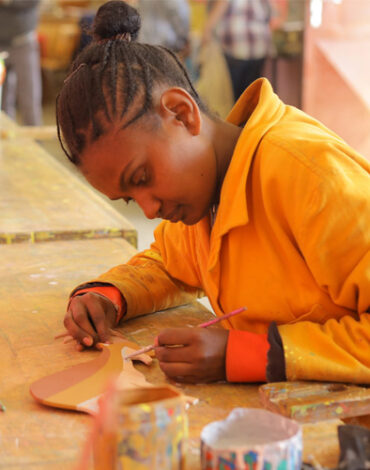
The Puzzle Making Program focuses on precision, creativity, and fine motor skills. Trainees learn to create wooden puzzles, educational toys, and decorative items, emphasizing careful painting and finishing. By producing high-quality handmade products, graduates compete with mass-produced items while developing patience, attention to detail, and craftsmanship.
Optics Training
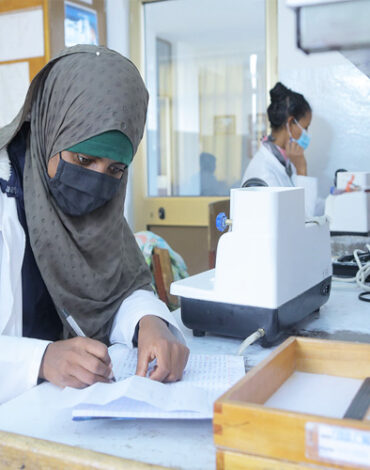
The Optics Training Program provides skills in spectacle production, dispensing, and optical services, supporting affordable eye care. Trainees learn lens surfacing, edging, frame assembly, fitting, adjustments, and client advising. While large-scale lens production has decreased due to imports, training in accuracy, machine handling, and optical fundamentals remains key. Advanced trainees also learn bifocal and cylindrical corrections and work with CR-39 lenses, preparing them for employment in optical workshops or independent practice.

We provide comprehensive education and social support services to learners with disabilities and marginalized groups, including:

Learning materials and assistive devices
Counseling and psychosocial support
School integration support
Family and caregiver awareness

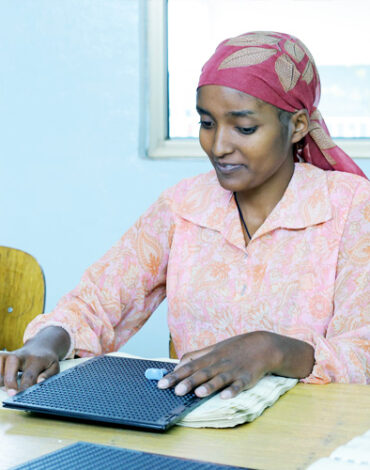
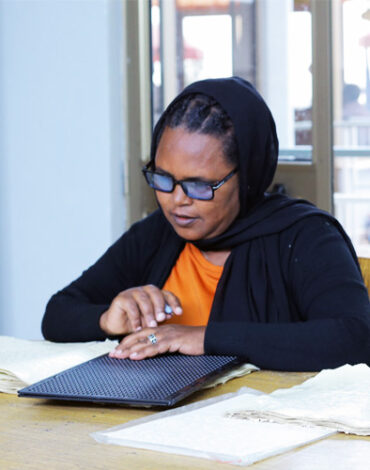
Established in 1982, the Functional Braille Literacy Program at Misrach Training Center has enabled more than 700 blind individuals to acquire essential reading and writing skills. The two-year program provides foundational and advanced training in Braille literacy, empowering learners to communicate, learn, and live more independently.

Participants learn to read and write Amharic and English Braille, beginning with finger-sensitivity exercises that are essential for developing tactile reading skills. Special attention is given to individuals who have recently lost their sight and require additional support to adapt.

At the end of the two-year program, learners sit for a formal examination, and those who successfully complete the course are awarded a certificate.


Key areas of instruction include:
We provide Braille education for blind and visually impaired children and youth to enhance their literacy, independence, and confidence. This includes:
Mobility and orientation skills
Sensory perception development
Basic reading and writing using the Braille slate and stylus
Advanced Braille reading and writing in Amharic and English
Writing using a Braille typewriter
Basic arithmetic
Personal and social responsibility and counseling
Personal hygiene and primary health care